Why RFK Jr.’s New Food Pyramid is Outdated (And the “Wa” Circle You Should Do Instead)
The year 2026 has kicked off with a massive conversation about the future of what we put on our plates. With R.F.K. Jr.’s announcement of the new American food guidelines, we are seeing the most significant shift in public health policy in over thirty years.
But as an Ikigai Biohacker, I have to ask: Are we just turning an old, broken system upside down, or are we actually moving toward “Vertical Progress”?
In my latest video, I dive deep into why I believe the new pyramid is already outdated and how we can use Japanese wisdom to find true balance.
The Good: A War on Toxins
Let’s start with the positive. The new guidelines are a massive victory in the fight against ultra-processed foods, refined carbohydrates, and sugar. These are the primary drivers of the lifestyle diseases that have plagued the modern world. Moving away from these metabolic toxins is a step every biohacker should celebrate.
The Problem: The Pyramid Trap
However, when you look at the shape of the new guidelines, we are still stuck in a Pyramid Hierarchy. The old 1992 pyramid overemphasized grains as the base. The new 2026 response effectively flips it, placing meat and dairy in the largest section (the base). While this might help with blood sugar in the short term, it creates three major issues for those of us focused on “Happy-evity”:
1. The mTOR vs. Autophagy Conflict
From a biohacking perspective, a heavy focus on animal protein can over-activate mTOR (mammalian target of rapamycin). While mTOR is necessary for growth, its chronic activation suppresses autophagy—our body’s natural cellular recycling process. For those of us over 60, autophagy is our most powerful tool for longevity. We don’t want to just “grow”; we want to “renew.”
2. The Meat Quality Crisis
There is a practical concern here, too. If the entire American population shifts to heavy meat consumption overnight, where will that meat come from? The supply of organic, grass-fed, regenerative meat is simply not enough for 330 million people. The result? A massive increase in the consumption of factory-farmed meat loaded with antibiotics and inflammatory Omega-6 fats.
3. The Effect on the Gut Microbiome
Placing animal-based protein and fat at the base (the largest zone) and whole grains at the tip (the smallest zone) has a profound effect on our gut health. A diet overly dominant in animal fats can feed harmful gut bacteria if not balanced correctly. Conversely, organic whole grains are a vital source of fiber—a major prebiotic that fuels the beneficial bacteria in our microbiome.
Moving from “Linear” to “Circular Harmony” (和)
The biggest issue isn’t the food at the bottom of the pyramid—it’s the Pyramid itself. A pyramid represents a “Linear” mindset. It suggests that one group of foods is “superior” or “more important” than another. This is a hierarchy of competition.
In Japan, we practice Circular Harmony (和). Instead of a pyramid, I propose the Wa Food Circle. In a circle, no single food group is the “boss.” Instead, they all work in synergy to complete the wheel of your health.
Protein, fat, carbs, vitamins, minerals, and fiber are equally important. Placing protein “above” other nutrients lacks a holistic understanding of nutrition. Other nutrients play crucial roles in protein absorption and muscle protein synthesis, as I discussed in these previous videos:
You’re Doing Protein WRONG: The Shocking Truth About Gut Health
Eat This With Your Protein: Supercharge Your Protein Synthesis
The “Ma-Go-Wa-Ya-Sa-Shi-I-Ko-Ku” Solution
To complete this circle, we look to the traditional Japanese mnemonic that ensures we get a wide variety of nutrients every single day:
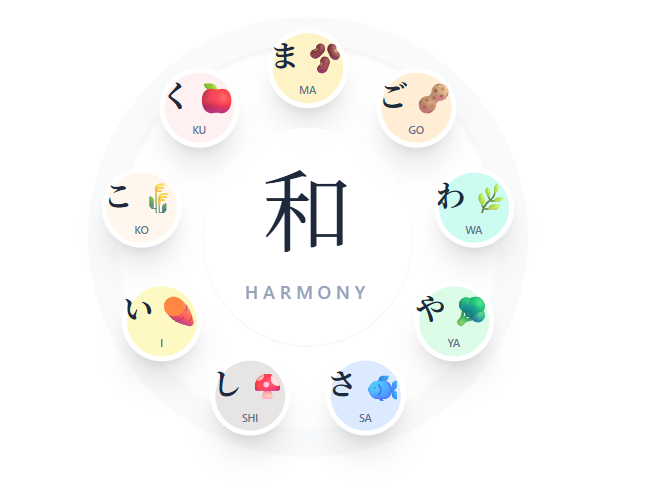
ま (Ma – Beans): Fermented soy like Natto and Miso.
ご (Go – Seeds/Nuts): Healthy fats and minerals.
わ (Wa – Seaweed): Ocean minerals and unique fiber.
や (Ya – Vegetables): Seasonal antioxidants.
さ (Sa – Fish): Specifically small, fatty fish for clean Omega-3s.
し (Shi – Mushrooms): Immune-boosting beta-glucans.
い (I – Tubers): Resistant starch for gut health.
こ (Ko – Whole Grains): Major sources of highly fermentable fiber.
く (Ku – Fruit): Nature’s seasonal sweetness.
The Verdict
In the “Wa” Food Circle, whole grains and beans are considered equal to fish. The goal isn’t to follow a strict daily hierarchy but to complete the circle throughout your week. This is how we achieve a balanced microbiome, managed mTOR levels, and a peaceful relationship with our food.
Are you ready to stop climbing the pyramid and start completing the circle?
Watch the full breakdown here:
Why RFK Jr’s New Food Pyramid Is Outdated (Do This Instead)
Stay vibrant and stay in harmony.
\ Get the latest news /